
African Spiritual Traditionst
Spirituality has played an important role in many African communities for generations, shaping how people understand family, community, nature, personal responsibility and the unseen world. For some, spiritual practice is expressed through prayer and remembrance of ancestors. For others, it involves sacred ceremonies, offerings, music, herbal knowledge or the guidance of recognised spiritual practitioners.
African spiritual traditions are not one single religion or system of magic. They represent a wide range of beliefs and practices that developed among different peoples across the continent, each with its own history, language, values and understanding of spiritual life. Learning about these traditions requires an appreciation of their differences as well as the connections that sometimes exist between them.
Table of Contents
ToggleAt 24hrs Love Spells, we recognise the importance of approaching traditional spiritual practices with respect for their cultural roots. This article introduces some of the broad themes associated with African spirituality and explains how particular traditions and ritual methods differ. It also provides a starting point for readers who want to learn more about Voodoo, herbal practices and other forms of spiritual work.
What are African spiritual traditions?
African spiritual traditions are the religious and spiritual systems developed by communities throughout Africa before and during the spread of Christianity, Islam and other world religions. Many indigenous practices continue today, sometimes alongside these religions and sometimes as distinct religious traditions.
The expression African traditional religion is often used as an umbrella term. However, scholars have noted that this label can obscure the diversity of beliefs across the continent. A tradition practised by one ethnic group cannot automatically be used to explain the spiritual life of another.
For example, Yoruba religious traditions have their own histories and understandings of divine and spiritual relationships. Vodun traditions in West Africa have distinct cultural roots, while Haitian Vodou developed through the historical experiences of African-descended communities in the Caribbean. Other African communities maintain their own ancestral practices, ceremonies and understandings of the sacred.
These traditions should be studied on their own terms rather than treated as interchangeable forms of magic.
For a scholarly introduction to the subject, see Oxford Bibliographies’ overview of African Traditional Religion.
The diversity of African spiritual life
Africa is home to thousands of communities, languages and cultural histories. Its spiritual heritage is equally varied. Some traditions emphasise relationships with ancestors, while others place particular importance on deities, divinities, sacred places, community ceremonies or the work of spiritual specialists.
Although there is no single belief shared in exactly the same way by every African tradition, several themes appear in different forms across some of them.
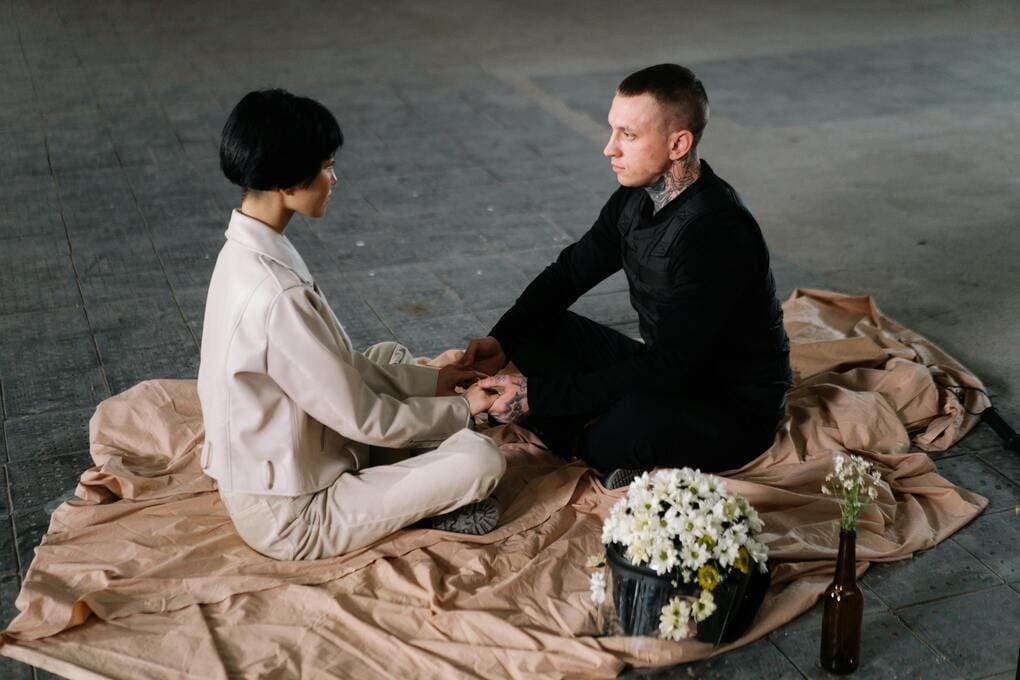
1. The relationship between the living and the ancestors
In a number of African spiritual traditions, ancestors are remembered as part of an ongoing relationship between family history, community identity and spiritual life.
Depending on the tradition, ancestors may be honoured through remembrance, prayers, family ceremonies or offerings. These practices can express gratitude, preserve cultural identity and recognise the influence of earlier generations on the lives of those who follow.
Ancestor-related practices differ considerably. Some communities have detailed ceremonial systems, while others express respect through family customs and oral traditions. It would be inaccurate to assume that every African community understands ancestors in the same way.
For people who follow these traditions, ancestral remembrance may be a source of belonging, continuity and moral responsibility.
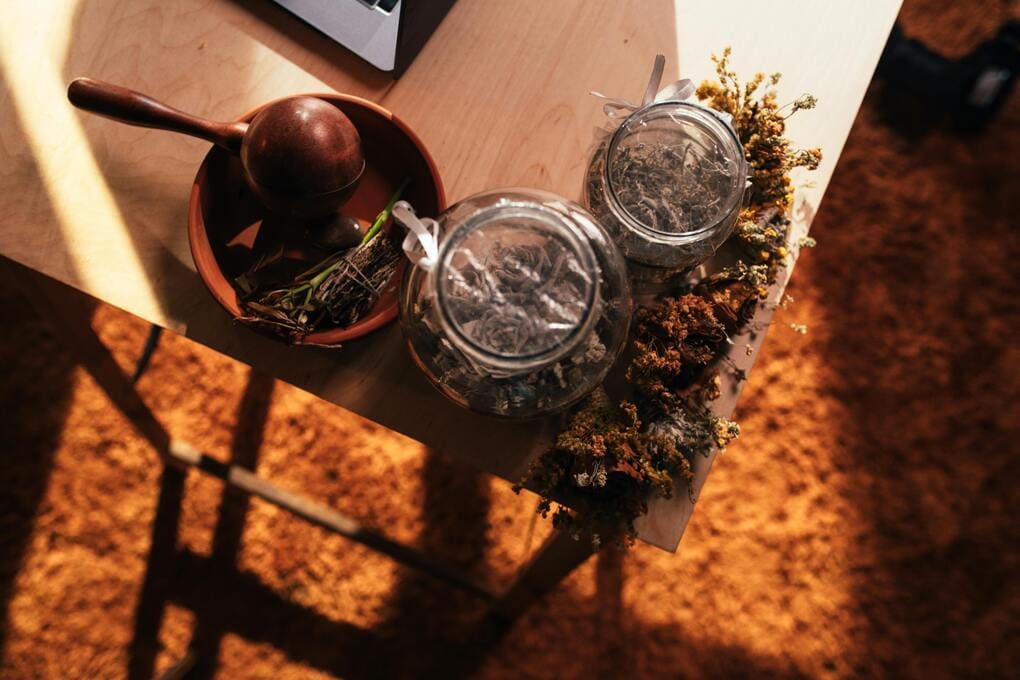
2. Beliefs about a supreme creator and spiritual beings
Some African religious traditions recognise a supreme creator alongside other divine or spiritual beings. The names, roles and relationships associated with these beings vary from one culture to another.
In some traditions, particular spiritual beings are associated with aspects of nature, human experience, moral qualities or the ordering of the world. In others, the relationship between a creator, lesser divinities and human beings is understood differently.
These ideas should be explained within their own cultural settings. A term from one tradition should not automatically be used to describe a spiritual figure from another.
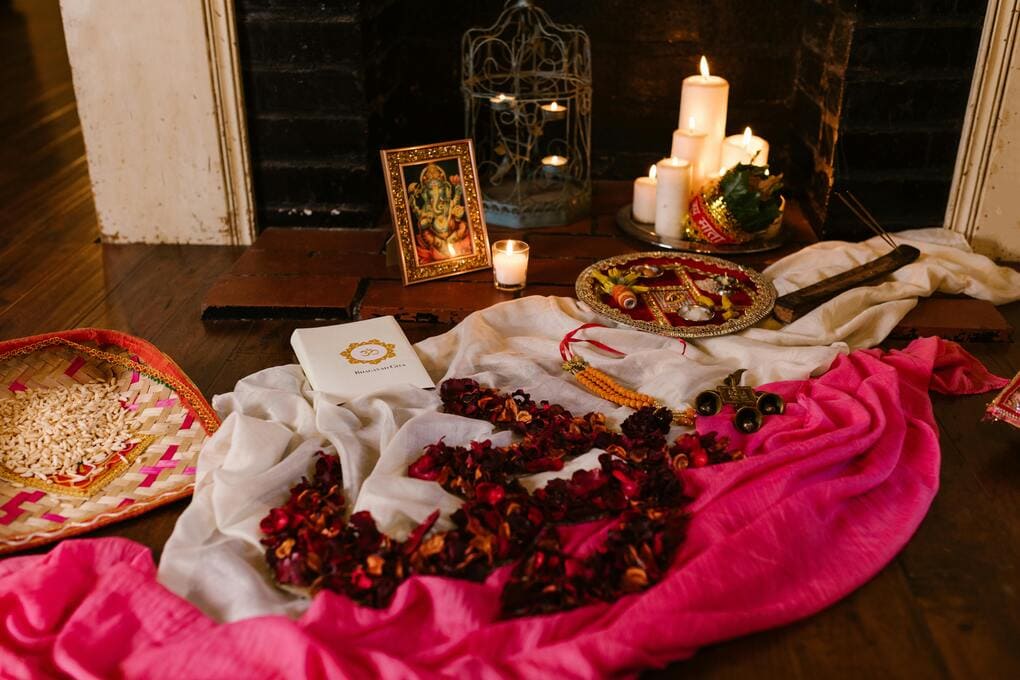
3. Nature and sacred places
Certain African spiritual practices attach spiritual significance to particular landscapes, bodies of water, trees, mountains, groves or other places. Their importance may be connected to community history, religious beliefs, ancestral memory or ceremonial activity.
The meaning of a sacred place is not always visible to an outsider. A site that appears ordinary to one person may hold deep significance for a community whose history and traditions are connected to it.
Respectful learning means recognising that some places and practices are culturally protected and that not every ceremony is intended for public participation.
4. Community, music, dance and oral tradition
Spiritual knowledge has often been passed between generations through oral teaching, storytelling, music, dance, proverbs and ceremonies.
In some traditions, drums and songs have specific ceremonial roles. Stories may communicate ideas about responsibility, relationships, history and the proper conduct of community life.
These are not merely decorative parts of a ritual. Where they have sacred meaning, they can be integral to how a community understands and expresses its beliefs.
Understanding Voodoo, Vodou and Vodun
The terms Voodoo, Vodou and Vodun are related, but their meanings depend on cultural and geographical context. They should not be used as though every practice associated with these names is identical.
Vodun traditions have important roots in West Africa, including areas of present-day Benin and neighbouring countries. Haitian Vodou developed in a different historical setting, shaped by African religious heritage, the experiences of enslavement, cultural resistance and interactions with other religious traditions.
The word Voodoo is also widely used in English-language popular culture, often in ways that reduce complex spiritual traditions to frightening stories about curses, dolls or secret powers. These stereotypes can obscure the religious, communal and historical dimensions of the traditions themselves.
Haitian Vodou, for example, is a living religion with its own spiritual understandings, ceremonies and community life. The Smithsonian has documented its African roots, Haitian cultural development and the way popular representations have often mischaracterised it. Read the Smithsonian Magazine’s feature on Haitian Vodou for further context.
For readers interested in the specific subject of love-related practices, our article on traditional African Voodoo love spells explores that topic separately. The dedicated Voodoo love spells page addresses the related service category.
The important distinction is that African spirituality as a whole is much broader than Voodoo, and Haitian Vodou should not automatically be presented as equivalent to every African tradition.
What role do spiritual practitioners play?
In some traditional religious communities, recognised practitioners help preserve ceremonial knowledge, interpret spiritual teachings, lead rituals or provide religious and community support. Their roles depend on the tradition and may involve years of learning, mentorship and participation in community life.
The titles used for practitioners also vary. A title that is meaningful in one religion may have no equivalent in another, so it is important not to use these names interchangeably.
People who seek spiritual services today may do so for different reasons. Some wish to understand a cultural tradition; others seek a ritual connected to personal reflection, love, family concerns or a difficult period in life.
At 24hrs Love Spells, the council of spiritual practitioners includes Mulangira Abdul, Chief Adam and Lady Aisha. People interested in spiritual services should be able to explain their concerns, ask questions and understand the nature and cost of a proposed service before deciding whether to proceed.
A respectful practitioner-client relationship should leave room for informed decisions. It should not depend on threats, fear or pressure to make repeated payments.
How traditional spiritual rituals differ
The word ritual covers many kinds of practice. A ceremony in a traditional religious community may have a very different purpose and meaning from a simple personal ritual performed at home.
Some rituals are communal and led by authorised practitioners. Others may be private acts of prayer, remembrance or personal devotion. Certain practices use symbolic objects, while others centre on spoken words, songs, offerings or actions carried out at a significant time.
The details depend on the tradition. It is misleading to suggest that every African spiritual ritual requires the same materials or follows a universal set of instructions.
Below are several ritual methods that readers may encounter when exploring contemporary spiritual practice. These methods should not automatically be described as authentic to every African tradition.
Herbal spiritual practices
Plants have practical, cultural and medicinal significance in many African societies. In particular traditions, certain plants may also have ceremonial or symbolic roles.
The knowledge associated with plants can be specific to a community, a practitioner or a particular use. A plant used in one tradition may have a different meaning in another, and its presence in a spiritual practice does not establish that it has a particular medical effect.
Our herb love spell article explores a specific herb-based ritual topic, while herbal love magic addresses the broader subject of herbal practices in contemporary love-related spirituality.
These pages should be understood as discussions of particular practices, not as evidence that all African spiritual traditions use the same herbs or ritual formulas.
Candle rituals
Candles appear in many different religious, spiritual and personal practices around the world. Depending on the setting, a candle may represent remembrance, prayer, hope, reflection or a stated intention.
However, candle rituals are not exclusive to African spiritual traditions. Their meanings depend on the religious or cultural context in which they are used.
Our candle love spell guide covers candle-based practices as a separate topic.
Crystal-related practices
Crystals and stones have symbolic or sacred roles in certain spiritual settings, while contemporary spiritual practices may use them as objects of focus or personal intention.
Their meanings are not universal. A stone considered significant in one cultural or religious context should not automatically be assigned the same meaning in another.
Our guide to crystal love spells explores this subject separately.
Moon-phase rituals
Some contemporary spiritual practices associate different moon phases with themes such as beginnings, reflection, release or renewal. These interpretations vary, and moon-phase rituals are not a single, universal African tradition.
Readers interested in this approach can explore our moon-magic love spells guide.
Honey-jar rituals
Honey-jar rituals are known in certain folk-magic and contemporary spiritual settings, where sweetness can serve as a symbol of affection, harmony or a desired improvement in relationships. The origins and meanings of these practices should be discussed carefully rather than attributed indiscriminately to all African traditions.
Our honey-jar love spells article provides a more focused discussion.
These examples illustrate why it is useful to separate an educational article about a particular ritual method from a broader explanation of African spiritual heritage.
African spirituality and love-related spiritual practices
Love, marriage, family and relationships are important parts of human life, and spiritual traditions may provide ways for people to express their hopes, concerns and commitments.
In some communities, relationship-related ceremonies are embedded within broader family and social customs. In other settings, people seek contemporary spiritual services with a particular intention, such as reconciliation or renewed affection.
These are not necessarily the same thing. A modern service marketed as a love spell should not automatically be described as a traditional ritual from a specific African people unless its cultural origin can be substantiated.
People who believe in spiritual love work may regard it as a way to focus intention, seek spiritual support or express hope during uncertainty. Some report positive experiences, but personal testimonies are not scientific proof that a ritual causes a particular result.
No spiritual practice can responsibly be presented as guaranteeing another person’s feelings, decisions or return within a fixed period. Mutual willingness, communication and respect remain important in real relationships.
For a general overview of the site’s love-related services, visit 24hrs Love Spells’ main love spells page.
Can you learn about African spiritual traditions at home?
You can begin learning at home through reputable books, museum resources, academic publications and material produced by knowledgeable practitioners and communities. The key is to approach the subject with curiosity and respect rather than assuming that a few online instructions represent an entire religion.
A useful starting point is to identify the specific tradition you want to understand. Ask where it developed, which communities practise it, what its own practitioners say about its beliefs and whether the information comes from a credible source.
It is also important to distinguish public educational material from restricted or sacred knowledge. Some communities do not consider every ritual suitable for outsiders to reproduce, and some ceremonial roles require training or recognition within the tradition.
If you are interested in a simple personal practice, begin with reflection, prayer or a written statement of your intentions rather than copying ceremonies whose meanings you do not understand.
For readers interested in personal rituals, our guide to easy love spells you can cast at home explores at-home practices separately. It should not be treated as a substitute for learning the specific cultural and religious context of a traditional ceremony.
Respect, responsibility and cultural understanding
Respectful engagement with African spiritual traditions means acknowledging the people who have preserved them and the histories that have shaped their development.
It also means avoiding the assumption that all traditional African practices are secret, frightening, harmful or focused on controlling others. These stereotypes have been reinforced by sensationalised portrayals and have often overshadowed the everyday religious and cultural lives of practitioners.
At the same time, cultural respect does not require accepting every commercial claim made in the name of spirituality. When considering a service, ask what it involves, how the practitioner describes its origins, what it costs and what can reasonably be expected.
Be cautious if someone claims that a ritual guarantees a specific romantic outcome, demands increasingly large payments or uses threats to prevent you from leaving. You can respect a spiritual tradition while still protecting your finances, privacy and personal boundaries.
For readers interested in Voodoo-related services, the dedicated articles on this site distinguish between the broad service category, specific intentions and educational subjects. Begin with Voodoo love spells for the service overview, or read Voodoo love dolls explained for a more specific educational topic.
Exploring African spiritual traditions further
African spiritual traditions are best understood as a rich and diverse body of religious and cultural heritage rather than a single collection of rituals. Their histories include different understandings of the sacred, ancestral relationships, community responsibilities, ceremonial practices and the role of spiritual knowledge in everyday life.
Some contemporary spiritual services draw inspiration from traditional beliefs, but the origins and meanings of individual practices should be explained accurately. Voodoo, herbal rituals, candle practices, crystals and moon-phase methods should not be treated as interchangeable simply because they appear together in discussions of spirituality.
At 24hrs Love Spells, this traditions hub provides a starting point for readers who want to explore the subject in more detail. The supporting pages cover specific traditions, love-related intentions and ritual methods, allowing each topic to be discussed on its own terms.
Continue exploring:
Traditional African Voodoo love spells — a tradition-specific topic.
Voodoo love spells — the dedicated service page.
Herbal love magic — an overview of herbal practices.
Candle love spells — candle-based ritual methods.
Moon-magic love spells — contemporary moon-phase practices.
Learning begins with understanding the context. By recognising the diversity of African spiritual life and approaching each tradition with care, readers can explore the subject without reducing generations of cultural knowledge to a single ritual or promise.
Frequently asked questions
1. What are African spiritual traditions?
African spiritual traditions are the diverse religious and spiritual systems developed by communities across Africa. They may include ancestral practices, beliefs about divine or spiritual beings, ceremonies, oral traditions and community rituals. Their meanings vary across different peoples and regions.
2. Is African traditional religion one single religion?
No. The term is often used as an umbrella description for many different traditions. It does not mean that all African communities share the same beliefs, deities, ceremonies or ritual methods.
3. Are African spiritual traditions the same as Voodoo?
No. Voodoo, Vodou and Vodun are related terms used in particular cultural and religious contexts, but they do not represent all African spirituality. Haitian Vodou has its own history and developed through African cultural heritage and Caribbean historical experiences.
4. Do all African spiritual traditions honour ancestors?
Ancestral remembrance is important in some African spiritual traditions, but beliefs and practices differ. It is not accurate to assume that every community understands ancestors or their spiritual role in the same way.
5. Are herbal rituals part of African spirituality?
Plants have practical, cultural and sometimes ceremonial roles in different African societies. However, plant use varies by community and purpose. Not every herbal ritual found online can be attributed to a traditional African religion.
6. Are candle and crystal rituals traditional African practices?
Candles and crystals appear in various spiritual settings around the world. Some contemporary rituals use them symbolically, but they should not automatically be described as universal or ancient African practices without reliable evidence of their cultural origins.
7. Can African spiritual practices help with love and relationships?
Some traditions include spiritual or ceremonial practices connected with family and relationships, while contemporary practitioners may offer love-related spiritual services. These practices are understood differently across cultures. Their spiritual significance should not be confused with scientific proof of a guaranteed romantic result.
8. How can I learn about African spiritual traditions respectfully?
Start with credible academic publications, museums, historical resources and explanations from practitioners and communities associated with the specific tradition. Learn its cultural context, avoid generalising across different peoples and respect any restrictions on sacred knowledge.
9. What should I ask a spiritual practitioner before using a service?
Ask about the service’s intended purpose, its cultural or spiritual background, the total cost and what expectations are reasonable. Be cautious of threats, pressure to make repeated payments or guarantees that another person will behave in a particular way.
10. Where should I start if I want to learn about Voodoo-related love practices?
Begin with an educational introduction to the specific tradition and distinguish it from the broader subject of African spirituality. The site’s traditional African Voodoo love spells article and Voodoo love spells service page address related but different search intents.