

A Conversation About Bad Luck: Q&A With Our Spiritual Healers
Bad Luck Removal: Break the pattern with guided spiritual work. We get some version of the same question almost every week from people all over the world: why does everything keep going wrong? Rather than write another list of tips, we sat down with one of our senior practitioners and asked the questions people actually bring to us, in their own words, as close as we could capture them. What follows is that conversation, lightly edited for length.
Q: Let’s start simple. What actually is “bad luck,” in spiritual terms? Is it the same thing as a curse?
Not quite, though people use the words interchangeably all the time, and I understand why. A curse, the way we talk about it in our practice, usually involves some kind of deliberate spiritual intention; someone, somewhere, directed negative energy at you specifically. Bad luck can have that same source, but it doesn’t have to. Sometimes it’s accumulated negativity that built up on its own, without any single person behind it.
Sometimes it’s an inherited family pattern nobody ever addressed. And sometimes, honestly, it’s just a run of ordinary hard circumstances that has nothing spiritual behind it at all. Part of what we do in a consultation is help someone figure out which of those they’re actually dealing with, because the response is different for each one.
Q: How do people usually describe it when they come to you?
Almost always the same shape: “nothing I do seems to work.” Not one bad thing, a string of them. A relationship that ends right when it should be getting stronger. A job opportunity that falls through at the last step, twice, in the same year. Money that seems to slip away no matter how carefully it’s managed. People come to us exhausted, more than anything. They’ve usually tried the practical fixes already. That exhaustion is often the first thing we address, honestly, before we even get to the ritual work itself.
Q: Is this really spiritual, or is it just… normal bad luck that everyone has sometimes?
Both things can be true, and I think it’s worth being honest about that rather than telling every single person who calls us that they’re spiritually blocked. Ordinary life includes hard stretches. What we’re listening for is pattern and disproportion: does this keep happening in the same area of someone’s life, well past what circumstance alone would explain? That’s usually the signal that something more is worth addressing.

There’s actually an interesting angle here from outside our own tradition entirely. Psychological researchers have studied how people relate to the idea of luck for decades, and one thing that comes up is that people who see themselves as consistently unlucky often develop what’s called an external locus of control, a sense that outcomes are happening to them rather than through their own actions.
Some more recent research has actually pushed back on the idea that believing in luck is automatically a bad sign, suggesting it can reflect something closer to hope rather than helplessness, depending on how someone holds that belief. I think that’s worth sitting with; our work isn’t meant to replace someone’s sense of their own agency. It’s meant to clear what’s genuinely in the way of it.
Source cited for the locus-of-control/luck-belief research referenced in the interview: Psychology Today, “Luck and Executive Function”
Q: So how do you actually go about removing bad luck, once you’ve determined it’s real?
It depends heavily on the source, which is why the assessment matters so much before any ritual begins. If it traces back to a specific curse or targeted negativity, that’s really curse removal work: a more intensive process. If it’s more general, accumulated negativity without a specific source, we usually start with a full cleansing: of the person, sometimes their home, sometimes both. And if it’s tied to a family pattern that seems to repeat across generations, that often calls for ancestral spiritual guidance, addressing the root rather than just the current symptom.
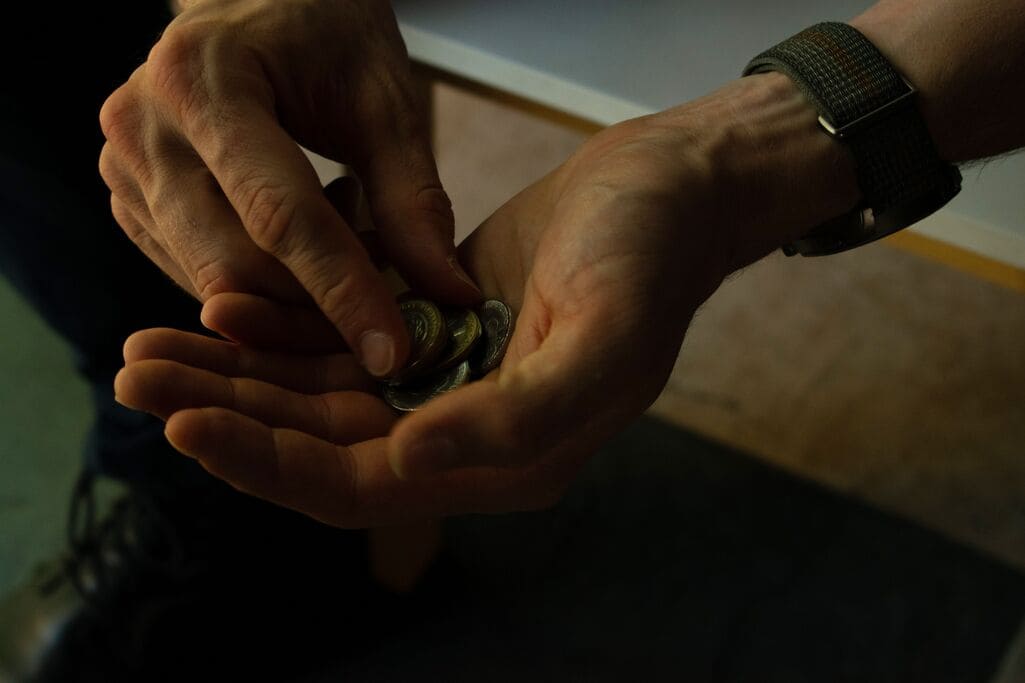
For bad luck specifically, the kind that isn’t quite a full curse but is clearly more than ordinary hardship, we often use a dedicated luck reversal ritual. It typically involves a cleansing bath with specific herbs, often bay leaf and cinnamon, followed by a symbolic act of “turning”, sometimes literally turning an object, like a coin or a small mirror, as a physical representation of reversing the pattern. We’ll usually follow that with a protective layer, so whatever cleared doesn’t simply return.
Q: What role do herbs and objects play in luck work specifically?
A real one, and people are often surprised how accessible some of it is. Bay leaf is probably the herb we use most for this specific purpose; burned or carried, it’s traditionally associated with reversing misfortune and drawing in success. Cinnamon speeds things along and adds warmth to a working that might otherwise feel purely defensive. Four-leaf clovers, horseshoes, certain coins kept in a wallet, a lot of what people already think of as “lucky charms” actually have real roots in this same tradition, even if most people using them today don’t know the history behind it.
Q: Are there things people do, without realizing it, that actually invite bad luck?
This comes up a lot, and I want to be careful here, because I don’t want anyone walking away thinking they caused their own hardship through some small mistake. But a few patterns are worth naming. Constant negative self-talk tends to keep a person’s own energy low, which some traditions believe makes someone more susceptible to outside negativity generally.
Holding onto unresolved resentment toward an ex, a family member, or a former friend can act almost like an open wound that negative energy finds easier to attach to. And neglecting the kind of regular spiritual maintenance we talk about elsewhere on this site, treating cleansing and protection as things you only do in a crisis, leaves people more exposed than they’d otherwise be.
Q: How long does luck reversal work usually take to show results?
I always tell people to expect this in stages rather than a single moment. Often, the first thing that shifts is internal, a sense of relief, of something lifting, within the first several days. Externally, most people report the clearest change over two to four weeks: an opportunity that finally goes through instead of falling apart, a stretch of ordinary good days in an area of life that had been consistently difficult. It’s rarely as dramatic as people expect walking in, and I think that’s actually a good sign: real, lasting change tends to build steadily rather than arrive all at once.
Q: What’s the biggest misconception people have when they come to you about bad luck?
That it’s permanent. People will say some version of “I’ve just always been unlucky,” as if it’s a fixed part of who they are rather than a pattern that can actually be addressed. I understand why they feel that way; if you’ve lived with something for years, it starts to feel like identity rather than circumstance. But in our experience, that’s rarely actually true. What looks like a permanent condition is usually a specific, addressable pattern that simply hasn’t been named and worked with properly yet.
Q: What would you say to someone who’s skeptical but still feels stuck?
Come talk to us anyway. You don’t need to arrive certain that this is spiritual to get value from an honest conversation about what you’re experiencing. Some of what we do is ritual work, genuinely. But a real part of it, every time, is just someone finally sitting down and taking a person’s whole pattern seriously instead of treating each bad thing as an isolated, unrelated event. That alone tends to matter more than people expect going in.
Q: Can bad luck really run in a family, or does that sound too far-fetched?
I’d actually push back gently on “far-fetched” here, because it’s one of the patterns we see most consistently. A family where every generation seems to struggle with the same specific area- failed marriages, financial instability, a particular illness, a pattern of estrangement is worth taking seriously as more than coincidence.
We cover this in more depth in our ancestral spiritual guidance, but the short version is: sometimes what looks like one person’s bad luck is actually the latest chapter of a much older, unaddressed family pattern. It doesn’t mean the person is doomed to repeat it. It usually means the work needs to go a generation or two deeper than just their own immediate situation.
Q: Do you remember a case that really stayed with you?
There are a few, but one that comes to mind was a man who’d had three business ventures fail in a row, each one collapsing for a completely different reason: one to a partner’s dishonesty, one to a market downturn, one to what genuinely seemed like terrible timing. By the time he came to us, he’d basically decided he was cursed to fail at anything he tried.
What we found, working through it together, was less a curse than a pattern of accumulated fear from the first failure that had followed him into every decision after, a kind of spiritual residue sitting right alongside the practical lessons he should have been learning instead. We did a cleansing and a protective working, but honestly, a good part of what helped was simply naming that pattern clearly enough that he could finally separate the fear from the facts. His fourth venture, as far as I know, is still going.
Q: Any advice for someone reading this who isn’t ready to book a consultation yet, but wants to start somewhere?
Start small and start honest. Keep a simple note of what’s actually been happening, not vague feelings, but specific events, when they happened, and where. That alone tends to reveal whether you’re looking at a real pattern or just a rough patch your mind has been stitching together into something bigger than it is. Alongside that, build a basic cleansing habit if you haven’t already; it costs almost nothing and does real, cumulative good regardless of what’s ultimately behind your situation. And be gentle with yourself in the meantime.
Whatever’s going on, the exhaustion of feeling stuck is real, and it deserves care on its own, separate from whatever spiritual work eventually happens.

Frequently Asked Questions
Is bad luck removal the same service as curse removal? They overlap but aren’t identical; bad luck removal addresses a broader, sometimes sourceless pattern of misfortune, while curse removal specifically addresses negative energy traced to a deliberate source.
Can I do any of this luck reversal work myself? Basic practices, carrying bay leaf, practicing regular cleansing, and avoiding the self-talk patterns mentioned above are accessible on your own. More targeted reversal work benefits from a practitioner’s guidance.
Does luck reversal work require me to believe in it fully for it to be effective? Most traditions hold that genuine openness helps, but arriving skeptical and curious rather than a firm believer doesn’t disqualify the work from being meaningful.
How is this different from just having a string of bad days? Pattern and duration are the key difference: an isolated hard week is ordinary life; a repeating, disproportionate pattern across months is what this work is built to address.
Should I still make practical changes in my life alongside this work? Yes, absolutely. Spiritual work addresses the underlying pattern, but practical effort in the affected area of your life still matters and works alongside it, not instead of it.
Q: One last question: is there ever a case where you tell someone it’s genuinely just bad luck, nothing spiritual at all?
More often than people expect, honestly. Part of doing this work responsibly is being willing to say that. If someone describes a single hard year with a clear, ordinary explanation behind each event- a layoff during a rough economy, a breakup that came from real incompatibility, a health scare that runs in the family for entirely medical reasons- I’m not going to manufacture a spiritual cause just because they came looking for one.
In those cases, I’ll usually still recommend basic maintenance, the kind of cleansing practice we talk about elsewhere, simply because it’s good general practice. But I won’t tell someone they’re cursed when the honest answer is that life has just been genuinely hard for reasons that don’t need a spiritual explanation. That kind of honesty is part of what makes the cases where something real is going on worth taking seriously.
Closing Thoughts
Bad luck rarely feels like something with a name or a shape while you’re living inside it; it just feels like the way things are. But in our experience, it almost always turns out to be more specific, and more addressable, than it feels from the inside. If what you’ve been carrying sounds like the pattern described in this conversation, it may be worth having your own situation looked at properly.
Ready to talk through your specific pattern with a practitioner? Book a private consultation to get started.