
What Materials Are Commonly Used in Love Spells?
When researching love spells, one of the first questions people ask is which materials are commonly used and what each one represents. Candles, flowers, written intentions, oils, herbs, and symbolic objects are among the materials associated with some love-related spiritual practices. However, there is no single ingredient list that applies to every love spell or spiritual tradition.
At 24hrs Love Spells Center, our council of spiritual practitioners, including Mulangira Abdul, Chief Adam and Lady Aisha, recognises that materials may carry different meanings depending on the tradition, the practitioner’s approach and the intention behind the work. An object may be selected for its symbolic association with affection, harmony, commitment, reconciliation or a new beginning.
People who value spiritual love work often see these objects as more than decorations. Within their beliefs, materials can help express an intention and form part of a meaningful ritual. Understanding their traditional or symbolic role is therefore more useful than assuming that one ingredient guarantees a particular result.
If you are new to this subject, begin with our Love Spells 101 knowledge hub before exploring individual materials.
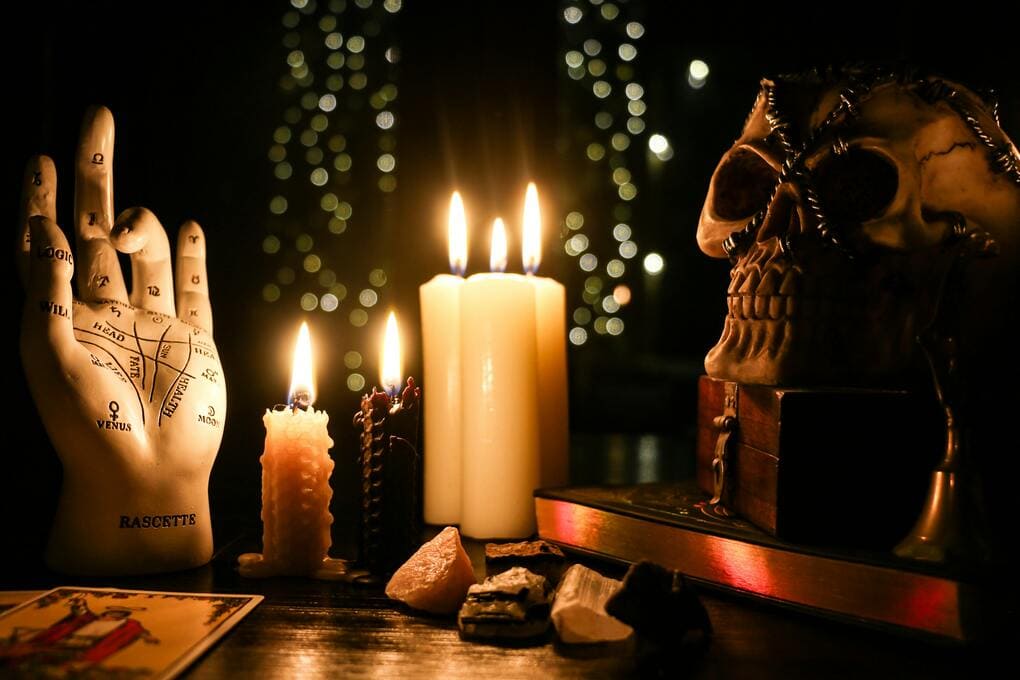
1. Candles: Symbolism, Focus and Intention
Candles are widely recognised in many ceremonial and spiritual settings, although their uses differ across traditions. In some contemporary spiritual practices, candle colour is associated symbolically with particular intentions.
For example, red is often associated with passion and romantic intensity, while pink may represent tenderness, affection or emotional warmth. White may be used to represent peace, clarity or a fresh beginning. These associations are not universal rules, and their meanings can differ according to the practitioner or spiritual system.
Within a love ritual, a candle may serve as a visual focus for prayer, reflection, or a clearly expressed intention. Some practitioners incorporate candles into a larger ceremony, while others do not use them at all.
It is important not to confuse symbolic meaning with a guarantee. The colour or size of a candle does not establish how a romantic situation will develop.
Safety note: Never leave a burning candle unattended. Keep it away from curtains, paper, bedding, children and pets, and use a stable, heat-resistant surface. Follow the manufacturer’s safety instructions.
2. Flowers: Affection, Beauty and New Beginnings
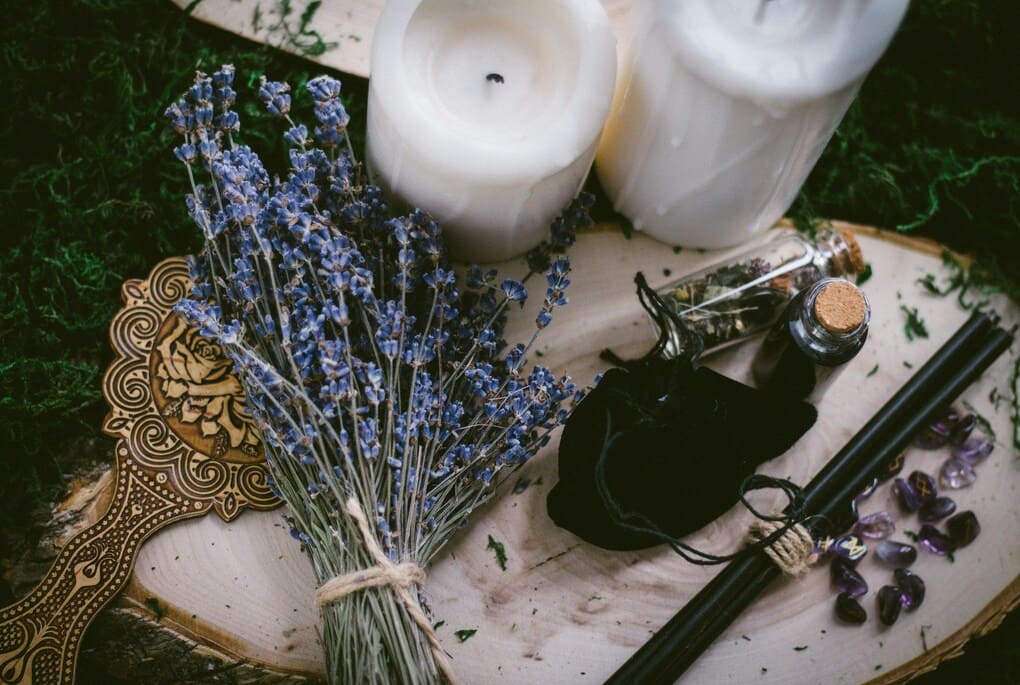
Flowers appear in many cultural, ceremonial and personal expressions of affection. Roses, in particular, are widely associated with romance, although the meaning of any flower depends on its cultural and personal context.
In some love-related spiritual practices, flowers may represent tenderness, appreciation, beauty, or the hope of renewed affection. They may be used as symbolic offerings, placed in a ritual space or included simply because they hold personal significance.
A flower can also represent a relationship’s history. Someone remembering a meaningful occasion with a partner may associate a particular bloom with an important memory, while another person may connect flowers with hope for a future relationship.
These associations are personal and cultural rather than universal ritual requirements. A practitioner should be able to explain why a particular flower is included in a ceremony rather than claiming that one type is necessary for every love spell.
3. Herbs and Plants: Traditional Knowledge and Symbolic Associations
Herbs and plants have roles in many cultural traditions, including practices involving healing, fragrance, prayer, cleansing, and ceremonial symbolism. Their meanings and uses differ significantly between communities.
In some contemporary spiritual settings, particular plants are associated symbolically with love, peace, harmony or personal renewal. However, it would be misleading to suggest that every plant has the same spiritual meaning across all traditions, or that every love spell requires herbs.
A plant’s cultural significance should be understood within the tradition in which it is used. Specific claims about a plant’s historical use should also be supported by reliable information about that community rather than broad assumptions about spiritual practices worldwide.
Use caution with unknown plants. Some herbs are toxic, can trigger allergic reactions, or interact with medication. Do not ingest unfamiliar plants, apply unknown preparations to the skin, or burn materials without understanding the risks. Spiritual symbolism does not make a substance physically safe.
4. Oils and Fragrances: Personal Meaning and Ceremony
Oils and fragrances may be incorporated into certain spiritual or ceremonial practices. Their role may relate to scent, personal significance, an established custom, or the practitioner’s particular method.
In contemporary spiritual settings, fragrance may be associated with creating a calm atmosphere or marking a moment of reflection. Some people connect particular scents with memories, affection or a sense of comfort.
The meaning depends on context. There is no universally recognised love-spell oil that can guarantee attraction, reconciliation or commitment. Claims about special preparations should be considered carefully, especially when they involve undisclosed ingredients, unusual application instructions or repeated requests for extra payments.
Essential oils and scented products also require care. Some can irritate the skin, cause allergic reactions, or be harmful if swallowed. Never assume that a product described as spiritual or natural is automatically safe.
5. Written Words, Names and Intentions
Written words can form part of some spiritual practices. A practitioner or participant may write a prayer, intention, or statement that expresses the purpose of the work.
The significance lies in what the words represent within the practice. They may help a person articulate a hope for reconciliation, express a desire for a healthier relationship, or reflect on the qualities they want in a future partner.
Names may also appear in some ceremonial contexts, but practices vary. There is no universal requirement to provide private documents, passwords, financial details, or extensive personal information to have a spiritual conversation.
A responsible practitioner should explain why any requested information is relevant and handle personal details respectfully.
For people seeking reconciliation, it can help to define the intention carefully. Wanting renewed communication, for example, is not exactly the same as wanting to rebuild a long-term partnership. Clear intentions help make the purpose of the work understandable, even when the spiritual interpretation remains a matter of belief.
What Is the Purpose of Honey in Love Spells?
Honey and other sweet substances appear in several forms of folk and spiritual practice.
Their symbolism is relatively straightforward: sweetness can represent harmony, affection, kindness, and the desire for a relationship to become less bitter or difficult.
This is particularly relevant to sweetening work, where the symbolism focuses on softening tension and encouraging more harmonious emotional circumstances.
Honey may be combined with herbs, written petitions, and other symbolic materials depending on the tradition.
It should not, however, be assumed that putting someone’s name into a jar of honey automatically creates a particular outcome.
The ritual’s meaning comes from the tradition, intention, and method surrounding the practice.
What Are Written Petitions Used For?
Written petitions can be an important part of ritual work because they allow the practitioner or client to express an intention clearly.
A petition might describe:
- The type of relationship desired
- A wish for reconciliation
- A desire for emotional harmony
- A commitment intention
- A hope for new romantic connection
- A specific relationship goal
The wording should generally be clear rather than excessively complicated.
The purpose is to establish what the ritual is intended to represent.
A vague intention such as “I want love” provides less direction than a carefully considered intention describing the kind of healthy relationship the person hopes to develop.
Are Photographs Used in Love Spell Rituals?
Some relationship-focused spiritual traditions use photographs or other personal representations.
The photograph may serve as a symbolic representation of the person or relationship involved.
This is particularly common in practices that focus on a specific relationship rather than general attraction.
However, personal information should be handled responsibly.
A reputable practitioner should clearly explain what information is required and why it is being requested rather than collecting unnecessary personal material.
This becomes especially important when considering online spiritual services.
What Role Does Incense Play?
Incense may be used to establish a particular atmosphere before or during ritual work.
Depending on the tradition, it can be associated with:
- Cleansing
- Prayer
- Meditation
- Spiritual preparation
- Intention setting
- Symbolic offering
Different fragrances may also carry different traditional associations.
Rose, jasmine, sandalwood, and other scents are often connected with romantic or spiritual symbolism.
Incense should always be burned responsibly, with adequate ventilation and a suitable heat-resistant holder.
Do Love Spells Require Expensive Materials?
No.
The financial cost of ritual materials does not automatically determine their spiritual significance.
Many traditional materials are relatively ordinary:
- Herbs
- Flowers
- Candles
- Water
- Salt
- Paper
- Oils
- Honey
The meaning comes from how they are incorporated into the ritual rather than from how expensive they are.
A practitioner who insists that increasingly expensive materials are necessary simply to make a ritual “stronger” deserves careful questioning.
Does Using More Ingredients Make a Love Spell Stronger?
Not necessarily.
This is one of the most common misconceptions surrounding ritual work.
A ritual containing twenty ingredients is not automatically more meaningful than one containing three.
In many traditions, each material has a specific symbolic role.
Adding unnecessary ingredients can actually make the ritual less coherent because the practitioner is no longer working from a clear intention.
A well-structured ritual may therefore use a small number of carefully selected materials.
Purpose matters more than quantity.
How Are Materials Chosen for Different Love Situations?
The intended outcome should influence the materials selected.
Consider the difference between these situations:
Attracting New Love
The focus may traditionally centre around attraction, confidence, openness and romantic opportunity.
Materials associated with roses, jasmine, pink or red candles and attraction-focused herbs may therefore appear in certain traditions.
Reconciliation After Separation
The symbolic emphasis may shift toward emotional healing, communication, forgiveness, harmony and reconnection.
Softening herbs, pink or white candles, flowers and written petitions may be incorporated depending on the practitioner.
Strengthening an Existing Relationship
The focus may involve harmony, affection, stability and emotional closeness.
The materials may therefore be selected to reflect those qualities.
Marriage and Commitment
Commitment-focused work may use symbols associated with stability, loyalty, unity and long-term connection.
Relationship Protection
The emphasis may shift away from attraction and toward protection, boundaries and spiritual cleansing.
Our existing protection spell guide explains how protection work is traditionally approached and why it may sometimes be considered alongside other spiritual practices.
The central principle remains the same:
The material should support the intention, not replace it.
Why Should You Avoid Random Love Spell Ingredient Lists?
The internet contains thousands of lists claiming that particular combinations of ingredients will guarantee a specific romantic result.
These lists can be misleading.
A material may have one meaning in a particular African spiritual tradition and another in European folk magic, modern witchcraft, or contemporary crystal practice.
Even the same herb can have different symbolic associations depending on the practitioner.
This is why copying an ingredient list without understanding its tradition can produce a ritual that looks impressive but lacks coherent structure.
Our article on the truth about love spells and common misconceptions discusses this broader issue, including why every love spell should not be treated as identical and why complicated rituals are not automatically more powerful.
What Should a Professional Love Spell Caster Explain About Materials?
If you are considering professional spiritual work, you should be able to ask straightforward questions.
A practitioner should be able to explain:
- What type of ritual is being considered
- Why particular materials are being selected
- What each material traditionally represents
- Whether the ritual is personalised
- What information the practitioner needs
- How the ritual will be conducted
- Whether the work is performed remotely
- What happens after the ritual
- What expectations are reasonable
You should not feel pressured to purchase increasingly expensive materials simply because you are anxious about your relationship.
Transparency is more valuable than sensational claims.
6. Paper, Fabric and Other Symbolic Objects
Some rituals use paper, cloth, ribbons or other small objects. Their significance may come from a particular tradition, a symbolic association, or the meaning attached to them by the people involved.
A written message might represent an intention. A piece of fabric could have a ceremonial role in one practice, while another practitioner might use neither. The object itself does not have a universal meaning independent of the ritual and cultural context.
It is particularly important not to assume that a personal possession belonging to another person is necessary for love work. Practices differ, and no one should be pressured into obtaining an object through deception, trespassing, or an invasion of another person’s privacy.
If a practitioner requests a particular item, ask what it represents and why it is relevant to the method being discussed.
7. Water and Other Everyday Materials
Water has ceremonial and symbolic significance in many religious and cultural settings. Depending on the tradition, it may be associated with cleansing, renewal, blessing, or transition.
Other everyday objects can also be incorporated into spiritual practices because of their symbolic meaning. Their inclusion depends on the ceremony rather than a universal formula.
It is not accurate to claim that all spiritual traditions use water in the same way or that one particular material is essential to every love spell. An explanation should identify the relevant tradition whenever a specific cultural practice is being described.
If a ritual involves water or another substance, use it in an ordinary safe manner. Do not drink unknown mixtures, combine chemicals or follow instructions that could expose you or another person to harm.
8. Photographs and Personal Items
Some spiritual services may ask about photographs or personal items, but these are not universal requirements. Whether an item has a role depends on the practitioner’s tradition and the agreed method.
Before providing a photograph or personal possession, ask why it is needed, how it will be used and whether an alternative is available. Be especially cautious if someone asks you to obtain private belongings without permission or requests sensitive personal data unrelated to the service.
Respect for privacy is important in any spiritual consultation. A request for a person’s passwords, banking details or private account access is not a normal requirement for explaining a ritual’s symbolic materials.
9. Do Materials Differ Between Love Spell Traditions?
Yes. Materials can differ according to cultural background, spiritual beliefs, regional customs and the individual practitioner’s approach.
Even where two traditions use similar objects, the meanings may be different. A candle, flower or written prayer does not carry precisely the same significance in every community.
African spiritual traditions are also diverse. They should not be treated as one uniform system with a single set of ingredients or ceremonial instructions. A meaningful description identifies the particular tradition or community when that information is known.
For general background on the diversity of African cultural heritage, the British Museum’s Africa collection provides a starting point for exploring objects and histories associated with different communities. Its collection is a cultural resource, not evidence that any particular love spell produces a specific result.
For readers who want to understand the wider process rather than the ingredients alone, see how love spell rituals are structured.
10. Does Using More Materials Make a Love Spell Stronger?
Not necessarily. The number of objects used in a ritual does not independently demonstrate its spiritual significance or establish whether a desired outcome will occur.
Some practices are deliberately simple. Others involve several materials because of the customs they follow. The suitability of an object depends on the particular method and the meaning assigned to it.
Be cautious if someone insists that you must continually buy additional ingredients to prevent a supposed disaster or secure a guaranteed romantic outcome. Ask for a clear explanation of the service, the costs and the reason for any proposed additions before agreeing.
Spiritual beliefs deserve respectful discussion, but they should not be used to create panic or pressure someone into spending money they cannot afford.
For broader consumer advice, the Federal Trade Commission’s guidance on scams explains common warning signs of deceptive offers. It is general consumer-protection guidance, not a judgement on spiritual beliefs or every practitioner.
11. How to Choose Materials Responsibly
If you are learning about love spell materials, a few principles can help you approach the subject thoughtfully.
- Understand the tradition. Ask which spiritual practice a material belongs to and what it means in that context.
- Ask why an item is included. A practitioner should be able to explain its intended role in understandable terms.
- Prioritise physical safety. Avoid unknown substances, unsafe burning practices and preparations that may harm you or someone else.
- Protect privacy. Do not share passwords, banking details or private possessions simply because someone claims they are essential to a ritual.
- Understand the cost. Clarify the service price and any proposed additional charges before making a decision.
- Keep expectations realistic. Spiritual practitioners and clients may report meaningful experiences, but no particular combination of materials guarantees that another person will return, fall in love, or commit to a relationship.
If you are considering spiritual work for the first time, our guide to preparing for love spell work explains how to think through your intentions and questions before a consultation.
12. How Materials Fit Into the Wider Love Spell Process
Materials are only one possible part of a love spell ritual. To understand their role, it helps to consider the wider process: the intention behind the work, the tradition informing the ceremony, the practitioner’s explanation and the way the ritual is concluded.
For example, an object selected to symbolise reconciliation may be meaningful within a particular spiritual framework. That symbolism does not mean the object itself can establish whether two people will rebuild their relationship.
People who value spiritual work may interpret their experiences through their beliefs, and some share positive personal accounts after seeking help. Those experiences are part of why these traditions continue to matter to many people. However, individual accounts should not be presented as a guarantee that everyone will have the same experience.
For a broader introduction to the spiritual explanations behind these practices, read how love spells are understood to work. If you want to explore what may follow a ritual, visit what happens after a love spell.
Frequently Asked Questions
What materials are commonly used in love spells?
Materials associated with some love-related spiritual practices include candles, flowers, herbs, oils, written intentions, water, and symbolic objects. The selection depends on the tradition and practitioner; none of these items is universal to every love spell.
What do red and pink candles mean in love spells?
In some contemporary spiritual settings, red is associated with passion and pink with affection or tenderness. These are symbolic associations rather than universal rules, and candle colours do not guarantee romantic outcomes.
Are herbs necessary for a love spell?
No. Some practices incorporate plants or herbs, while others do not. Their meanings and uses vary between traditions, and unknown plants should never be assumed safe to ingest, apply to the skin, or burn.
Do love spells require a photograph or personal item?
Not universally. Some practitioners may include personal objects in a particular method, but this is not a requirement shared by all traditions. Ask why an item is needed and protect your privacy.
Does a more expensive set of ingredients produce better results?
There is no reliable basis for treating a higher price or a larger number of materials as proof of effectiveness. Ask what the service includes and be cautious of pressure to make repeated payments in exchange for guaranteed results.
Can I use ordinary household objects in a spiritual ritual?
Some personal spiritual practices incorporate everyday objects, depending on the tradition and intention. However, do not assume that an online instruction applies to every practice, and avoid unsafe substances or actions that could affect another person without consent.
Where can I learn more about love spell rituals?
Start with our Love Spells 101 knowledge hub, then explore our guides to ritual structure, preparation, and what happens during a love spell.
Final Thoughts
Materials used in love spells can carry rich symbolic meanings within the spiritual traditions that use them. Candles may represent particular intentions, flowers may express affection, and written words may help articulate the purpose of a ceremony. Yet no single object or ingredient list defines every love spell.
At 24hrs Love Spells Center, we respect the different spiritual beliefs through which people seek love, reconciliation, and commitment. Understanding the meaning of a material, asking informed questions, and approaching the process thoughtfully can help you decide what is appropriate for your own circumstances.
The most important thing is to understand the practice rather than assume that a specific ingredient guarantees an outcome.
Continue learning with our guide to how to prepare for love spell work, which focuses on clarifying your intentions and getting ready for a spiritual consultation.