
Spiritual Cleansing: Clearing What You Carry, Even When Nothing’s “Wrong”
Curse removal responds to a specific problem a pattern of misfortune that’s built up and needs to be addressed directly. Spiritual cleansing is different. It’s maintenance, not emergency repair: the ongoing practice of clearing accumulated negativity before it has the chance to settle into something heavier. You don’t need to believe something is actively wrong to benefit from it, the same way you don’t need to be sick to benefit from rest. Most spiritual traditions treat regular cleansing the way you’d treat any other kind of upkeep: not a response to crisis, but a habit that prevents one.
This is also one of the more accessible practices in this collection. Where curse removal often benefits from an experienced practitioner’s assessment, cleansing is something almost anyone can build into a regular personal rhythm, at home, with simple and widely available tools.
Why Cleansing Matters Even When Nothing Feels Wrong
Negative energy, in most traditions that work with this concept, doesn’t announce itself dramatically most of the time. It accumulates quietly from ordinary daily friction, difficult interactions, crowded and stressful environments, or simply carrying unresolved emotion for too long without release. Left unaddressed, this kind of buildup is generally believed to make a person more vulnerable to more serious spiritual interference, the way a weakened immune system makes the body more vulnerable to illness.
Regular cleansing works against this quietly, in the background, the same way any preventive habit does. Many practitioners describe consistent cleansing practice as one of the simplest, most effective forms of spiritual self-care available low effort, low cost, and cumulative in its benefit over time.
For the broader foundations this practice builds on, see our spiritual healing services page.
The Four Zones of Cleansing
Cleansing isn’t a single practice; it applies across four distinct areas of life, each with its own traditional methods.
Zone One: Yourself
Personal or “aura” cleansing addresses energy you’ve absorbed directly from stressful interactions, crowded places, or emotionally heavy situations you’ve moved through.
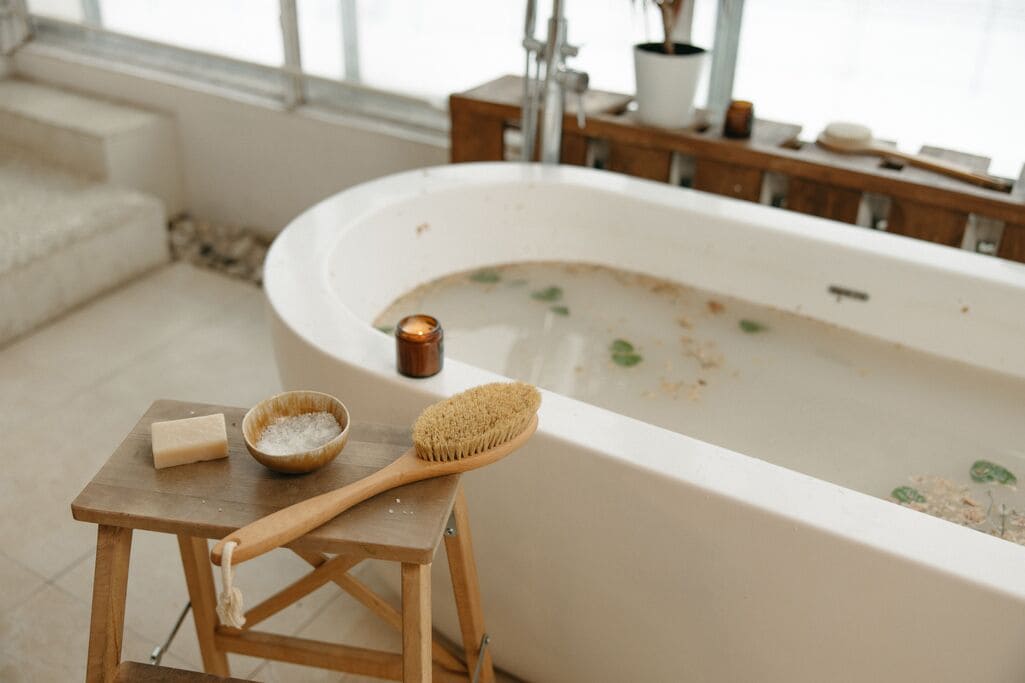
A simple self-cleansing bath. Add a handful of sea salt and a few sprigs of rosemary to warm bathwater. Sea salt is traditionally associated with drawing out and neutralizing negative energy, while rosemary adds a layer of clarity and protection. Soak for ten to fifteen minutes, visualizing tension and heaviness leaving your body with the water as you eventually drain the tub.
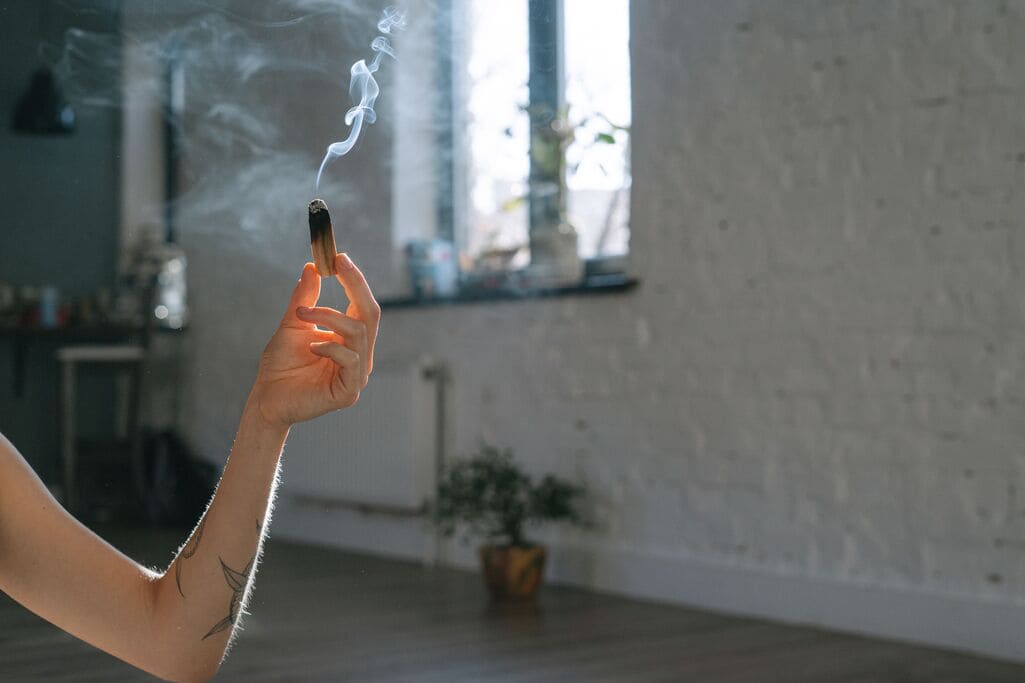
A quick self-cleansing practice for busy days. When a full bath isn’t practical, many traditions use smoke cleansing instead, passing a lit bundle of dried herbs (sage or palo santo are common choices) around your body, front and back, with the clear intention of clearing whatever you’ve picked up during the day.
Zone Two: Your Home
A living space absorbs energy from everyone who passes through it: arguments, stress, visitors carrying their own heaviness, even ordinary daily wear. Homes generally benefit from cleansing on a more regular schedule than personal cleansing alone.
Room-by-room smoke cleansing. Starting at your front door and moving through each room in a clockwise direction, pass a lit herb bundle through the space, paying particular attention to corners, closets, and areas where energy tends to stagnate. Open a window afterward to let the old energy leave the space physically as well as symbolically.
Salt at the thresholds. Placing a small line of salt at your front door, or in the corners of a room that’s felt particularly heavy, is a traditional method for creating a passive barrier against negative energy entering or lingering.
This overlaps closely with dedicated protection ritual work for homes needing more than routine maintenance.
Zone Three: Objects
Secondhand items, gifts from people you’re no longer close to, or objects connected to a difficult period of your life can carry residual energy worth clearing before you continue using them.
Sunlight and moonlight cleansing. Placing an object in direct sunlight or moonlight for several hours is one of the gentlest, most widely used methods for clearing an item’s accumulated energy, particularly effective for jewelry, small keepsakes, or crystals new to your collection.
Water cleansing. For items that can safely get wet, rinsing under running water while holding a clear intention to release whatever energy the object is carrying is a simple, direct method used across many traditions.
Zone Four: Relationships
This is the zone most people overlook, but emotional residue from relationships, especially ones that ended badly, can linger and affect how you show up in new connections.
Cord-cutting visualization. Sit quietly and visualize an energetic cord connecting you to the person or relationship you’re releasing. Speak your intention to release the connection while visualizing that cord being gently but completely cut, taking a moment afterward to visualize the loose end on your side closing and healing.
Written release. Writing a letter to the person or relationship you’re cleansing, never meant to be sent, expressing what needs to be said, then burning or burying the letter as a symbolic act of release, is a widely used practice for clearing emotional residue that’s harder to address through smoke or water alone.

How Often Should You Cleanse?
Different zones call for different rhythms. Personal cleansing is often recommended weekly, or after any particularly draining or stressful day; a quick smoke pass or salt bath doesn’t need to wait for a scheduled ritual moment. Home cleansing is generally recommended monthly for routine maintenance, though many practitioners also cleanse specifically after hosting a difficult gathering, moving into a new space, or going through a significant argument at home.
Object cleansing is typically done once, when an item is first acquired, and again if it’s been through a period of heavy use during a difficult time. Relationship cleansing doesn’t follow a fixed schedule at all; it’s generally performed as needed, whenever residual emotional attachment feels like it’s affecting your present rather than staying in the past where it belongs.
Timing these practices around the lunar cycle can add an extra layer of intention; many practitioners favor the waning moon specifically for cleansing and release work, aligning with the moon’s own natural movement toward darkness and clearing. See lunar ritual timing for more on how this works.
Building a Simple Cleansing Kit
Because cleansing works best as a regular habit rather than an occasional emergency response, it helps to keep the basics on hand rather than needing to source everything fresh each time. A modest kit covers most routine needs across all four zones.
For personal cleansing: sea salt, a small bundle of dried sage or rosemary, and a heatproof dish for burning if you’re using smoke methods.
For home cleansing: a larger herb bundle or loose dried herbs for burning, additional sea salt for thresholds, and a lighter or matches kept specifically for ritual use rather than general household use.
For object cleansing: nothing more than access to a sunny windowsill and, ideally, a spot outdoors or by a window where moonlight reaches directly overnight.
For relationship cleansing: simple paper and a pen for written release work, along with a safe, heatproof container if you plan to burn what you write rather than bury it.
Keeping these basics together, in a small box or drawer set aside specifically for this purpose, removes the friction that often keeps cleansing from becoming a genuine habit. When the tools are already gathered, a stressful day is far more likely to end with an actual five-minute ritual than with good intentions that never quite happen.
A Word on Consistency Over Intensity
It’s worth saying plainly: a modest, consistent cleansing practice tends to outperform an occasional, intense one. Someone who does a quick, ten-minute smoke pass through their home every few weeks is generally better protected against accumulated negativity than someone who performs one elaborate, hours-long ritual twice a year and otherwise does nothing in between. This mirrors advice found across nearly every wellness practice, spiritual or otherwise: small, sustained habits tend to compound in ways that occasional intense effort doesn’t.
If you’re building this practice for the first time, resist the urge to make it complicated. A pinch of salt in your bathwater on a hard week, or a quick pass of smoke through your front hallway after a difficult visitor leaves, does real, cumulative work even without the full four-zone ritual described above every single time.
Where This Practice Comes From
Cleansing traditions run across nearly every culture with a spiritual practice, often developed independently but arriving at strikingly similar tools. Traditional African spiritual practice central to the guidance our own practitioners offer has long used smoke, water, and specific herbs as part of routine spiritual maintenance, closely tied to ancestral connection and the health of a household as a whole. Indigenous traditions across the Americas developed smudging practices using sacred plants long before the term became widely known outside those communities. Various Asian traditions incorporate incense and specific cleansing rituals tied to household harmony and the flow of energy through a living space, sometimes formalized into detailed systems for arranging and maintaining a home.

What’s notable, again, is the convergence: smoke, water, salt, and sunlight appear across nearly every tradition that addresses cleansing, suggesting these tools respond to something close to a universal human intuition about how negative energy accumulates and how it can be released. Our practitioners draw specifically on African ancestral practice, but the broader principle that spaces and people benefit from regular, intentional clearing extends well beyond any single lineage.
How to Tell the Cleansing Is Working
Because cleansing is preventive rather than crisis-response, its signs tend to be subtler than something like curse removal’s more dramatic pattern-breaking. Many people describe a simple, immediate lightness after a personal cleansing, the same feeling of relief that comes after finally addressing a task you’d been avoiding, even though nothing external has changed yet. A home that’s been cleansed often feels different to walk into almost immediately, a shift visitors sometimes comment on without knowing anything about the ritual that preceded their visit.
Over a longer period of consistent practice, many people notice a broader shift: sleep that feels more restful, day-to-day friction that seems to resolve more easily, and a general sense of things “flowing” rather than constantly snagging. None of this is dramatic on its own, which is exactly the point: cleansing works by preventing the buildup that leads to more serious, disruptive patterns, rather than by producing a single dramatic before-and-after moment.
Signs You Need a Cleansing Right Now
Beyond routine maintenance, certain moments call for cleansing more urgently:
- After spending extended time in a crowded, chaotic, or emotionally heavy environment
- Following a serious argument, especially one that happened inside your home
- After a breakup, particularly if the relationship ended with real hurt or resentment
- When your living space starts to feel unusually heavy or uncomfortable without a clear practical reason
- After receiving a secondhand item, particularly one connected to someone else’s difficult life event
- Before beginning any significant new ritual work, to clear the ground first
Common Mistakes People Make With Cleansing
Only cleansing during a crisis. Treating this as purely reactive rather than routine maintenance means missing most of its preventive value.
Rushing through the ritual. Passing a smoke bundle quickly through a room without real intention tends to produce a much weaker result than a slower, more deliberate pass with genuine focus.
Forgetting to cleanse objects that carry real emotional weight. People often remember to cleanse a new home but overlook a specific item: an ex’s old gift, a piece of furniture from a difficult period that’s still quietly present in daily life.
Skipping ventilation during smoke cleansing. Opening a window or door afterward matters both practically and symbolically, giving cleared energy somewhere to actually go.
Neglecting relationship cleansing entirely. This is the zone most commonly skipped, even though emotional residue from past relationships is often exactly what interferes with new connection or soulmate lovemate.
Frequently Asked Questions
Do I need special or expensive tools to cleanse effectively? No, sea salt, rosemary, sage, and sunlight are widely available and inexpensive, and most traditions consider intention far more important than the specific tools used.
Can I cleanse my home if I live with others who aren’t spiritually inclined? Yes, most cleansing methods don’t require anyone else’s participation or belief to be effective for the space as a whole.
Is it possible to over-cleanse? Excessive cleansing isn’t typically considered harmful, though most practitioners find a regular, moderate rhythm more sustainable and effective than obsessive daily ritual.
How is cleansing different from curse removal? Cleansing is routine, preventive maintenance addressing ordinary accumulated negativity. Curse removal addresses a specific, more serious pattern of misfortune that generally requires deeper, guided intervention.
Can I combine cleansing with other rituals in this collection? Yes, cleansing is often the recommended first step before other ritual work, clearing the ground so candle, honey jar, or herbal rituals can land more effectively.
Conclusion
Not every spiritual practice needs to respond to a crisis. Spiritual cleansing is the quiet, steady counterpart to more urgent work — the regular clearing that keeps ordinary life from accumulating into something heavier, and keeps you genuinely open for whatever you’re working toward next.
Want a personalized cleansing routine built around your specific home and situation? Speak with our practitioners to get started.
1 thought on “Spiritual Cleansing: Clearing What You Carry, Even When Nothing’s “Wrong””