Why the Structure of a Love Spell Ritual Matters | How Love Spell Rituals Are Structured
When people explore love spell rituals, they often want to understand more than the ingredients or spoken words. They want to know how a ritual is organised, why certain stages may be included, and what each part means within a spiritual tradition.
In our experience of spiritual practice, the structure of a love spell ritual gives the work its direction. Preparation establishes the intention, symbolic actions express that intention, and the closing stage brings the ritual to a natural conclusion. The precise approach depends on the practitioner, the spiritual tradition, and the purpose of the work.
At 24hrs Love Spells Center, our council of spiritual practitioners, including Mulangira Abdul, Chief Adam and Lady Aisha, recognises that people approach love work with different hopes. Some seek reconciliation with a former partner, others wish to encourage a fresh romantic connection, and some hope to bring greater warmth and commitment into an existing relationship.
Every ritual does not follow one universal formula. Understanding the possible stages helps you appreciate the meaning of the process without assuming that every practitioner must perform the same actions.
What Does the Structure of a Love Spell Ritual Mean?
The structure of a ritual refers to the order in which its different elements are arranged. These may include preparation, setting an intention, using meaningful symbols, spoken prayers or invocations, focused spiritual work, and a closing observance.
In many spiritual traditions, the sequence is meaningful in its own right. An action may prepare the participant, another may express the central intention, and a final action may mark the completion of the ceremony.
Anthropological research also examines rituals as patterned actions involving symbols, participants, and culturally meaningful practices. For further reading, see the academic overview of the structure and study of ritual.
That research provides context for understanding ritual structure; it does not establish that love spells produce particular romantic outcomes. Spiritual practitioners and their clients may interpret their experiences through their own beliefs, traditions, and personal testimonies.
To explore the wider subject first, read our introduction to love spells and their meaning.
1. Preparation Before the Ritual Begins
Preparation is often the first stage of spiritual work. Depending on the tradition, it may involve arranging a suitable space, gathering selected materials, setting aside time for concentration, or discussing the purpose of the work with a practitioner.
Preparation also gives the person seeking help an opportunity to reflect on what they genuinely want. Someone hoping to reconcile with an ex-partner may need to consider whether they are seeking an apology, renewed communication, emotional healing, or the possibility of rebuilding a relationship.
These are different intentions, even when they all fall under reconciliation.
Preparation should therefore establish clarity rather than encourage fear or desperation. A responsible practitioner should be able to explain the general purpose of the work and what participation involves.
For more detail on this stage, visit our article on how to prepare for love spell work.
2. Defining the Central Intention
Once preparation is complete, the next element in some rituals is the definition of a central intention.
Within spiritual traditions, intention may be expressed through prayer, a spoken statement, meditation, or another practice appropriate to the ritual. The aim is to give the work a clear spiritual focus rather than allowing it to become a collection of unrelated actions.
For example, the intention behind a reconciliation ritual may focus on renewed understanding, peaceful communication and the possibility of restoring affection. A ritual associated with new love may instead centre on openness to a suitable relationship and the hope of forming a meaningful connection.
The wording and method vary. Some practitioners prefer a simple, direct intention, while others follow established prayers or ceremonial forms.
The important distinction is that the intention describes the desired direction of the spiritual work. It is not a guarantee that another person will think, feel, or act in a particular way.
3. Selecting Symbols and Ritual Materials
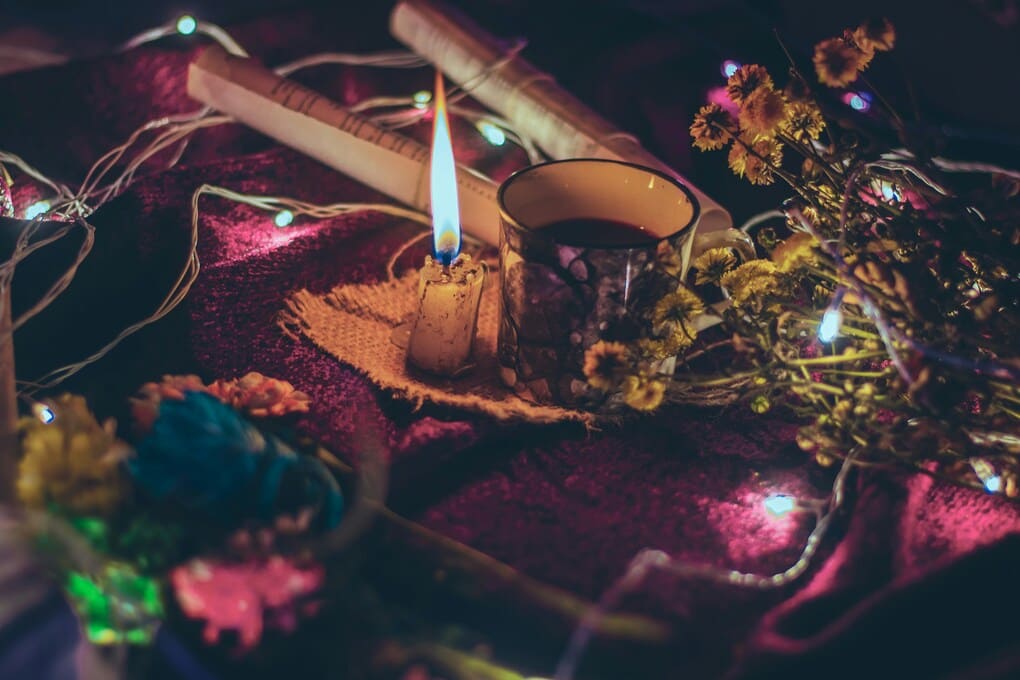
Materials may form another part of a love spell ritual. Depending on the practice, a practitioner might use candles, written words, flowers, oils, personal symbols or other objects associated with the tradition.
Their significance is not necessarily universal. An object that carries a particular meaning in one spiritual system may have a different role elsewhere. Its colour, preparation, placement or association may matter to the practitioner using it.
It is therefore misleading to claim that every love spell requires the same ingredients or that one particular object guarantees a stronger result.
The meaning behind a material can be as important to a practitioner as its physical appearance. Within a spiritual framework, an object may serve as a representation of devotion, hope, affection, unity or a new beginning.
For a more detailed look at the materials themselves, read what materials are commonly used in love spells.
4. The Main Ritual or Spiritual Observance
The central stage is where the principal spiritual actions take place. The form depends on the particular tradition and the purpose of the ritual.
Possible elements include prayers, invocations, spoken intentions, symbolic gestures, periods of focused reflection, or the use of selected objects. Some ceremonies are brief and simple; others follow a more elaborate sequence.
This is one reason it is unwise to judge all love spell rituals by a single description found online. Different practitioners may have different inherited practices, training, beliefs, and ways of conducting spiritual work.
The central observance is generally understood by practitioners as the point at which the ritual’s intention is expressed through its principal actions. Those who believe in spiritual work may view this stage as an opportunity to focus their hopes and seek spiritual assistance.
A ritual’s length, complexity, or number of materials should not automatically be treated as proof of its effectiveness. Elaborate procedures do not, by themselves, establish that a particular romantic outcome will follow.
Our related article, what happens during a love spell, explores the experience of this stage in greater detail.
5. Repetition, Focus and Symbolic Actions
Some rituals include repeated words, gestures, or other actions. Repetition may be part of a tradition’s established form, helping participants follow a familiar sequence and maintain concentration.
A prayer might be spoken in a prescribed way, for example, or a symbolic action may be repeated according to the practitioner’s method. Other rituals do not rely on repetition at all.
Within spiritual practice, these actions may carry meaning beyond their outward appearance. Participants may understand them as expressions of commitment, devotion, remembrance, or a request for spiritual support.
It is important not to assume that repeating a phrase a certain number of times will produce a predictable result. Ritual instructions differ between traditions, and there is no universally established sequence that applies to every love spell.
For this reason, anyone working with a practitioner should ask about the meaning of the method being used rather than copying an unfamiliar ceremony without understanding its context.
6. Closing the Ritual
A ritual often has a closing stage that marks the end of the formal observance. Depending on the tradition, this may involve a final prayer, a concluding statement, putting away materials, or another customary action.
Closing the ritual helps distinguish the ceremonial process from ordinary activities that follow. It may also provide a moment for reflection on the intention that was expressed.
There is no single closing procedure for all love spells. Some practices are simple, while others follow more specific customs. A practitioner should explain any relevant instructions clearly, particularly when materials need to be handled or stored in a particular way.
The closing stage should not be used to create unnecessary anxiety. A person should not be told that an ordinary mistake automatically causes disaster or that failing to perform an unfamiliar action will inevitably ruin their romantic future.
7. Reflection and What Happens Afterwards
After the ritual, attention naturally turns to what follows. Some people reflect on their hopes, observe developments in their relationships, or discuss their experiences with the practitioner who assisted them.
Within spiritual communities, people sometimes describe positive experiences after ritual work. These reports may include renewed communication, a change in the atmosphere of a relationship, or a personal sense of hope. Such accounts can be meaningful to the people who share them, although they do not establish that every similar ritual will lead to the same outcome.
It is sensible to consider developments in context. If an ex-partner begins communicating again, for instance, the quality of that communication and the willingness of both people to rebuild trust remain important.
Spiritual practice and practical relationship care do not have to be treated as opposing choices. A person may continue to value their beliefs while also communicating honestly, respecting boundaries, and making thoughtful decisions about the relationship.
Read our guide to what happens after a love spell for a closer look at this stage.
Do All Love Spell Rituals Follow the Same Stages?
No. The stages described above are a useful way to understand how a ritual may be organised, but they are not a universal checklist.
A traditional ceremony may place particular importance on prayer, ancestral beliefs, selected objects or instructions passed down through a spiritual lineage. Another practice may be much simpler and focus on a clearly expressed intention.
Even within a broad spiritual tradition, individual practitioners may differ in how they arrange a ceremony. The purpose of the work, the practitioner’s approach, and the beliefs behind the ritual can all influence its structure.
This diversity is important when discussing African spiritual practices in particular. Africa contains many distinct communities, histories and religious systems. It would be inaccurate to describe every African tradition as if it followed one method.
The British Museum’s collection and interpretation of African cultural history offers further context on the diversity of African heritage, including ritual performances and objects associated with particular communities.
The best approach is to ask which tradition a practitioner follows and what the individual stages mean within that tradition.
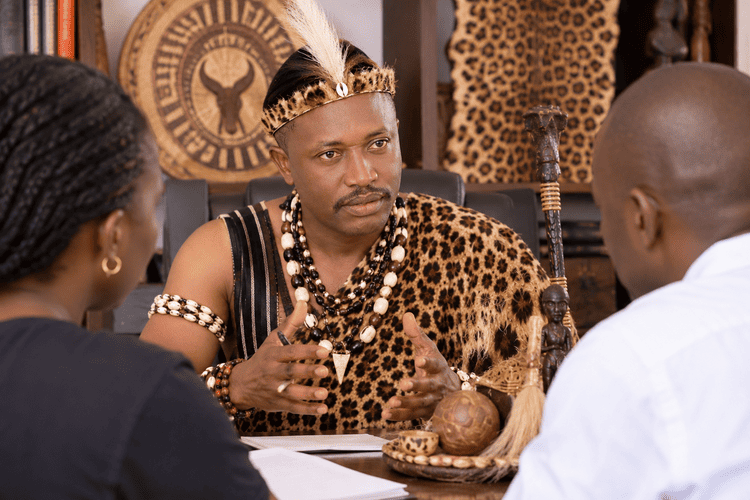
How Ritual Structure Relates to the Purpose of the Love Spell
Although the general structure may have similarities, the intention behind a ritual can differ considerably.
Reconciliation and restoring a relationship
A reconciliation ritual may be approached by a practitioner as spiritual work associated with renewed affection, communication, or the possibility of repairing a relationship.
The personal circumstances matter. A separation caused by a misunderstanding is different from a relationship marked by persistent disrespect or harm. Spiritual work should not be presented as a substitute for addressing the actual problems involved.
Attraction and new love
A ritual intended to support new love may centre on openness to romantic connection, the hope of meeting a compatible partner or the desire to welcome affection into one’s life.
The focus may differ from reconciliation because there is no established relationship to restore.
Marriage and commitment
Where the intention relates to marriage or commitment, the spiritual meaning may centre on unity, stability and a shared future. However, a healthy commitment ultimately requires the genuine participation of both people.
These examples illustrate why a ritual’s purpose should be understood before discussing its structure. Similar materials or ceremonial stages do not necessarily mean two rituals are intended to achieve the same thing.
Questions to Ask a Practitioner About Ritual Structure
If you are considering spiritual love work, asking clear questions can help you understand the process before deciding whether it suits you.
Consider asking:
- What spiritual tradition or method informs this ritual?
- What is the purpose of each major stage?
- Which materials are involved, and why are they used?
- Is there anything I need to prepare beforehand?
- Will I be expected to perform any actions myself?
- What should I reasonably expect after the ritual?
- How will you discuss progress if the situation does not change as hoped?
- Are there any additional costs I should understand before agreeing?
A trustworthy practitioner should be willing to explain the process in understandable terms. You should not have to agree to escalating payments because someone frightens you with claims that a ritual has failed or that an undisclosed danger will occur unless you pay more.
For further reading, the US Federal Trade Commission provides practical advice on recognising and responding to scams and deceptive claims. This is general consumer-protection information, not a judgement on spiritual belief or every spiritual service.
Can the Structure of a Ritual Tell You Whether It Will Work?
The structure can help explain how a practitioner approaches the spiritual work, but it cannot independently establish what outcome will occur.
People who value love spell traditions may place importance on the practitioner’s experience, the meaning of the ceremony, and reports from people who have sought similar help. Positive personal accounts can explain why individuals continue to value these practices.
At the same time, a detailed ritual is not proof of a guaranteed result. Relationships involve other people, changing circumstances and decisions that cannot reliably be predicted from the ceremony alone.
If you would like to explore this question more directly, read how love spells are understood to work and our article on how long love spells may take.
The most useful understanding combines respect for spiritual tradition with a clear idea of what the ritual involves, why its stages matter, and what you are agreeing to when you seek assistance.
Frequently Asked Questions
1. What are the main stages of a love spell ritual?
A ritual may include preparation, setting an intention, selecting symbolic materials, the main spiritual observance, a closing stage and reflection afterwards. The exact sequence depends on the tradition and practitioner.
2. Why is preparation important in a love spell ritual?
Preparation helps establish the purpose of the work and ensures that any materials or arrangements required by the particular practice are ready. It can also give the person seeking help time to clarify their hopes.
3. Do all love spell rituals use candles and written intentions?
No. Some practices use candles, written words, or other symbolic objects, while others use different methods. Materials and their meanings vary, so there is no single ingredient list that applies to every ritual.
4. How long does a love spell ritual last?
There is no universal duration. Some rituals are relatively brief, while others involve a more extended sequence of observances. The length of a ceremony should not be treated as a reliable measure of its effectiveness or of how quickly a relationship may change.
5. What happens after a love spell ritual is completed?
Practitioners may provide closing instructions or suggest a period of reflection. People may then observe developments in their circumstances and consider their next steps. For a fuller explanation, see our article on what happens after a love spell.
6. Can I perform a love spell ritual without a practitioner?
Some people explore simple personal spiritual practices independently, while others prefer to consult someone familiar with a particular tradition. Anyone considering an unfamiliar practice should understand its requirements and avoid unsafe materials, coercive instructions, or pressure to spend money.
7. Does following every stage guarantee a result?
No ritual sequence can honestly guarantee a particular romantic outcome. Within spiritual traditions, people may believe that the structure supports the intention of the work, and some report positive experiences. Those reports should not be confused with a promise that every person will experience the same result.
Understanding the Meaning Behind Each Stage
Understanding how love spell rituals are structured can help you look beyond the surface and appreciate why preparation, intention, symbolic actions, and closure may matter within a spiritual practice.
There is no single formula shared by every tradition. Each ritual should be understood in the context of the beliefs and methods from which it comes, rather than judged by a universal list of steps.
At 24hrs Love Spells Center, we recognise that people often turn to spiritual practices with sincere hopes for love, reconciliation and commitment. We respect the positive experiences people report while encouraging anyone seeking help to understand the process, ask questions, and make informed decisions.
The next step is to understand the materials themselves: explore our guide to what materials are commonly used in love spells.