What Happens During a Love Spell: During a love spell, a practitioner may follow a spiritual ceremony involving prayer, focused intention, symbolic objects, or other actions associated with their tradition. The precise process depends on the practitioner, the purpose of the work, and the spiritual beliefs that inform the ritual. Some ceremonies are simple, while others follow a more structured sequence.
At 24hrs Love Spells Center, our council of spiritual practitioners, including Mulangira Abdul, Chief Adam, and Lady Aisha, understands that people often seek spiritual assistance during important moments in their love lives. You may be hoping to reconnect with a former partner, restore affection in an existing relationship, or open your life to new love.
People who value spiritual work may regard the ritual as an opportunity to express their intentions and seek spiritual support. Some also report feeling hopeful, reflective, or emotionally encouraged during the experience. These experiences differ from person to person, and there is no single ceremony or guaranteed emotional response shared by everyone.
Understanding what may happen during a love spell can help you approach the subject with greater confidence and appreciate the meaning that different traditions attach to their practices.
1. The Practitioner Establishes the Purpose of the Ritual
A love spell ritual generally has a particular purpose within the practitioner’s spiritual framework. Before or at the beginning of the ceremony, the practitioner may confirm the intention associated with the work.
The intention might relate to reconciliation, affection, harmony, commitment, or the hope of finding a compatible partner. Although these goals fall under the broad subject of love, they represent different circumstances.
For example, someone seeking reconciliation may hope for an opportunity to communicate with a former partner. Someone in an established relationship may be looking for renewed warmth and understanding.
Clarifying the purpose helps ensure that the ritual is understood in the context of the concern being addressed. It also gives the practitioner and participant an opportunity to confirm that they have the same understanding of the work.
The language used to express an intention varies. Some practices incorporate prayer or spoken words, while others use a different form of spiritual observance.
2. The Ritual May Begin With Prayer or Spiritual Reflection
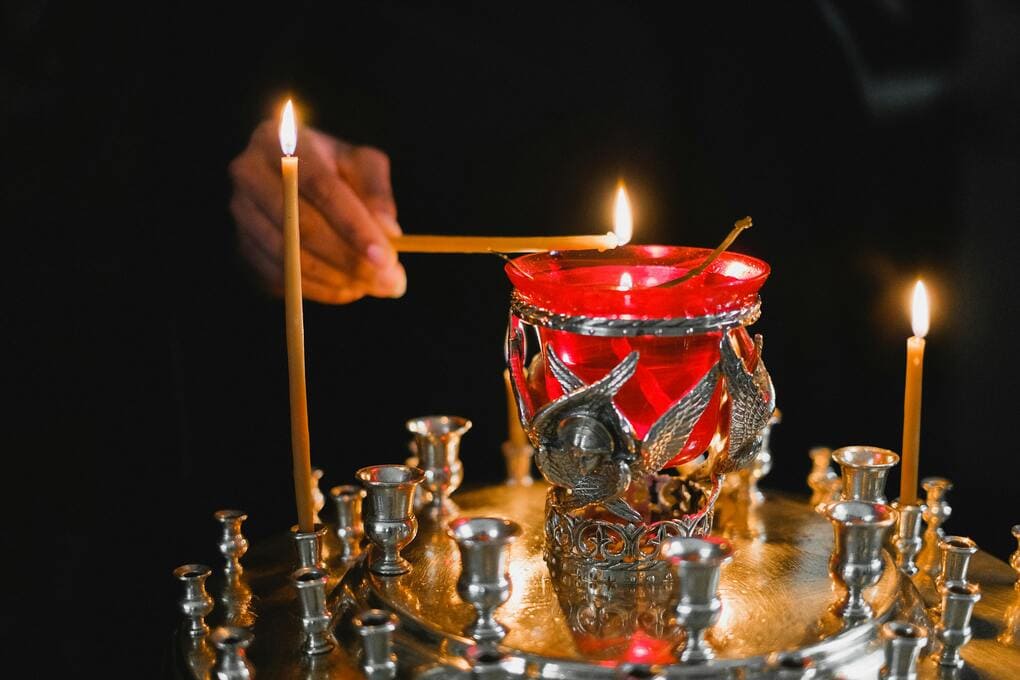
Prayer, invocation, or focused reflection may form part of a love spell ritual, depending on the tradition.
For practitioners who use these methods, the opening stage may be a way to acknowledge spiritual beliefs, express the purpose of the work, or prepare for the main ceremony. The meaning of the prayer or invocation belongs to the particular practice in which it is used.
Not every love spell includes a formal prayer, and there is no universal wording that all practitioners follow.
The wider study of ritual explores how repeated actions, spoken expressions and symbolic practices can carry meaning within religious and cultural life. For general background, see Encyclopaedia Britannica’s overview of ritual.
This cultural context helps explain why the same outward action can hold different meanings in different traditions. It does not establish that a particular ceremony will produce a particular romantic outcome.
3. Symbolic Materials May Be Introduced
Some love spell rituals incorporate materials such as candles, flowers, written intentions or other objects. These items may represent ideas associated with the work, depending on the practitioner’s spiritual framework.
A candle, for example, may carry a symbolic association with affection or intention in a particular practice. Flowers may represent beauty or tenderness, while written words may express a hope for reconciliation or a new beginning.
Other rituals may use different materials or none at all. The presence of a particular object does not establish that the ritual is more powerful than another ceremony.
If you are attending a ritual or receiving a service, you should be able to ask what the materials represent and whether you have any role in using them.
Our related guide explains what materials are commonly used in love spells, including how symbolic meanings vary between practices.
4. The Main Spiritual Work Takes Place
The central part of the ceremony is where the practitioner carries out the main actions associated with the chosen method.
Depending on the tradition, these may include spoken intentions, prayer, symbolic gestures, periods of focused attention or a sequence of customary actions. Some rituals are brief and straightforward; others may be more elaborate.
It is important to understand that these are examples, not mandatory stages for every love spell. A practitioner should explain the general nature of the service rather than suggest that all traditions follow an identical formula.
Within spiritual belief, this central stage may be understood as the principal expression of the ritual’s purpose. People who seek spiritual help may approach it with hopes for renewed affection, reconciliation, or a positive change in their romantic circumstances.
A ceremony’s length, complexity, or number of objects does not independently demonstrate its effectiveness. What matters for understanding the process is the meaning of the actions within the tradition being followed.
5. The Practitioner May Repeat Words or Symbolic Actions
Some ceremonies incorporate repetition. A prayer may be spoken more than once, a symbolic gesture may be repeated, or a sequence of actions may follow a customary order.
In these settings, repetition may help maintain the structure of the ritual or reflect an established spiritual practice. Other ceremonies do not use repeated words or gestures.
There is no universal number of repetitions that applies to every love spell. Nor should a person assume that making a mistake with an unfamiliar phrase automatically causes harm or guarantees failure.
If you are participating in a ritual, ask for clarification when instructions are unclear. You should not feel frightened into believing that every minor detail must be performed perfectly to avoid a terrible consequence.
6. What Might You Feel During a Love Spell?
People can respond to spiritual ceremonies in different ways. Some may feel calm, hopeful, reflective, or emotionally moved. Others may experience the ritual as a familiar spiritual observance without any particularly strong emotional response.
Your experience may depend on your beliefs, expectations, personal circumstances, and the nature of the ceremony.
Within spiritual communities, participants sometimes interpret a feeling of peace, renewed hope, or personal clarity as meaningful to their spiritual journey. These experiences can be important to the people who report them, even though an emotion by itself cannot establish what is happening in another person’s mind or predict the future of a relationship.
There is no required sensation that proves a love spell is working. Feeling nothing unusual does not automatically mean that a ritual has failed, and an intense emotional experience does not guarantee a romantic result.
You can respect your own spiritual interpretation while remaining thoughtful about what you can observe in your everyday circumstances.
7. Can You See Immediate Changes While the Ritual Is Happening?
Usually, the ritual itself is the ceremony being performed; it is not a reliable way to determine whether another person will change their feelings or behaviour immediately.
Some people describe meaningful experiences during spiritual work, while others look for developments in the days or weeks that follow. These reports vary and should be understood as individual experiences rather than a universal pattern.
For example, if your hope is reconciliation, you may naturally be interested in whether your former partner contacts you. However, events during the ceremony cannot reliably establish what that person is thinking or whether they will decide to reconnect.
It is better to distinguish between what happens during the ritual and what may happen in the relationship afterwards.
For more on the difference between reported timing and individual expectations, read how long love spells may take.
8. Does the Ritual Change Depending on the Type of Love Spell?
Yes. The purpose of the work and the practitioner’s tradition can influence the ceremony.
Reconciliation and lost love
A ritual intended for reconciliation may be approached within a spiritual framework as a request for renewed affection, communication, or an opportunity to repair a relationship.
The actual ceremony depends on the practitioner and the tradition. There is no single set of actions that defines every reconciliation ritual.
Attraction and new relationships
Work associated with new love may focus on welcoming affection, romantic opportunity, or a compatible partnership. It may have a different intention from a ritual concerned with restoring an existing relationship.
Marriage and commitment
A ritual associated with commitment may be understood as expressing hopes for unity, stability, or a shared future. However, a lasting commitment requires the genuine willingness of both people.
These examples describe different intentions rather than fixed ritual formulas. A practitioner should explain what the proposed service is intended to address.

9. Does Every Practitioner Perform the Same Ritual?
No. Spiritual traditions are diverse, and individual practitioners may follow different teachings, customs, and methods.
Some ceremonies may be influenced by inherited traditions, while others reflect the individual practitioner’s spiritual approach. Similar materials or spoken expressions do not necessarily mean two rituals have the same meaning.
This is especially important when discussing African spiritual practices. Africa contains many communities and distinct religious and cultural histories; it would be inaccurate to treat them as one uniform system.
If a practitioner identifies a particular cultural tradition, ask about the context of the method rather than assuming that it represents every community within a region.
The British Museum’s Africa collection provides a starting point for exploring the variety of objects and cultural histories associated with African communities.
10. What Should a Practitioner Explain Before the Ceremony?
Although not every ceremonial detail will necessarily be shared, you should understand the basic service you have agreed to receive.
A practitioner should be able to explain the general purpose of the work, what your participation involves, whether any materials are needed, and what the agreed service costs.
You should also be able to ask what is meant by any expected outcome. If someone promises a guaranteed romantic result or pressures you to pay additional fees by creating fear, take time to reconsider the arrangement.
General consumer advice from the Federal Trade Commission on recognising scams can help you identify warning signs of deceptive offers. This is consumer-protection information, not a judgement on spiritual belief or every spiritual practitioner.
Respect for spiritual traditions and informed decision-making can coexist.
11. How Does a Love Spell Ritual End?
The closing stage varies between practices. A ritual may end with a final prayer, a concluding statement, a customary gesture or another action recognised by the tradition.
The purpose may be to mark the end of the formal ceremony or bring its sequence to a conclusion. Some practices have specific closing customs, while others conclude simply.
If materials are involved, the practitioner should explain any relevant handling or safety instructions. Do not burn unfamiliar substances, ingest unknown preparations, or follow unsafe directions simply because they are described as part of a spiritual ritual.
Once the ceremony has concluded, you can ask any remaining practical questions and confirm whether follow-up communication is included in the service.
For more detail on the next stage, read what happens after a love spell.
12. What Happens Emotionally After the Ritual?
After a spiritual ceremony, people may feel hopeful, relieved, thoughtful, or uncertain. Others may simply return to their usual activities without experiencing a noticeable emotional change.
If the ritual relates to a difficult relationship, it is understandable to wonder what will happen next. Give yourself room to reflect without feeling that you must interpret every coincidence or small event as a definite sign.
Some people share positive experiences following spiritual work, including a renewed sense of hope or encouraging developments in their relationships. These accounts may be meaningful to those who report them, but the experiences of one person cannot guarantee the same outcome for another.
You can continue to value your spiritual beliefs while paying attention to actual communication, behaviour and the choices available to you.
Frequently Asked Questions
What happens during a love spell?
Depending on the tradition, a love spell may involve prayer, spoken intentions, symbolic materials, focused reflection or other ceremonial actions. There is no single sequence followed by every practitioner.
How long does a love spell ritual take?
The duration depends on the method and the practitioner. Some ceremonies are brief, while others follow a longer sequence. The length of the ceremony does not establish how quickly a relationship may change.
Will I feel something during a love spell?
You may feel calm, hopeful, reflective or emotionally moved, but experiences vary. There is no particular sensation that proves a ritual is working, and not experiencing a strong feeling does not automatically mean that it has failed.
Are candles and herbs used in every love spell?
No. Some practices use candles, herbs or other symbolic objects, while others do not. The materials depend on the tradition and the practitioner’s method.
Can a love spell make someone contact me during the ritual?
There is no reliable way to guarantee that another person will contact you during or after a ceremony. People may report different experiences following spiritual work, but another person’s decisions cannot be predicted with certainty.
What happens when the ritual ends?
The practitioner may complete a closing observance and explain any follow-up arrangements. Depending on the tradition, you may be given instructions or an opportunity to discuss questions about the process.
Does a more elaborate ceremony mean a stronger love spell?
Not necessarily. Complexity and the number of materials do not independently establish effectiveness. The ritual should be understood within its spiritual context, and its outcome should not be guaranteed solely on the basis of its appearance.
Final Thoughts: Understanding the Experience of Love Spell Casting
What happens during a love spell depends on the spiritual tradition, the practitioner, and the purpose of the ceremony. Prayer, intention, symbolic objects, and closing observances may form part of the process, but no single formula represents every practice.
For people who believe in spiritual love work, a ritual may provide a meaningful way to express their hopes for reconciliation, affection or commitment. Some people also report positive experiences after seeking spiritual help. Their accounts can be meaningful without implying that every person will experience the same outcome.
At 24hrs Love Spells Center, we recognise the importance of spiritual beliefs in matters of the heart. Understanding the process, asking questions, and keeping your expectations thoughtful can help you approach the experience with greater confidence.
Continue reading: Explore what happens after a love spell to learn about the period following the ceremony.